
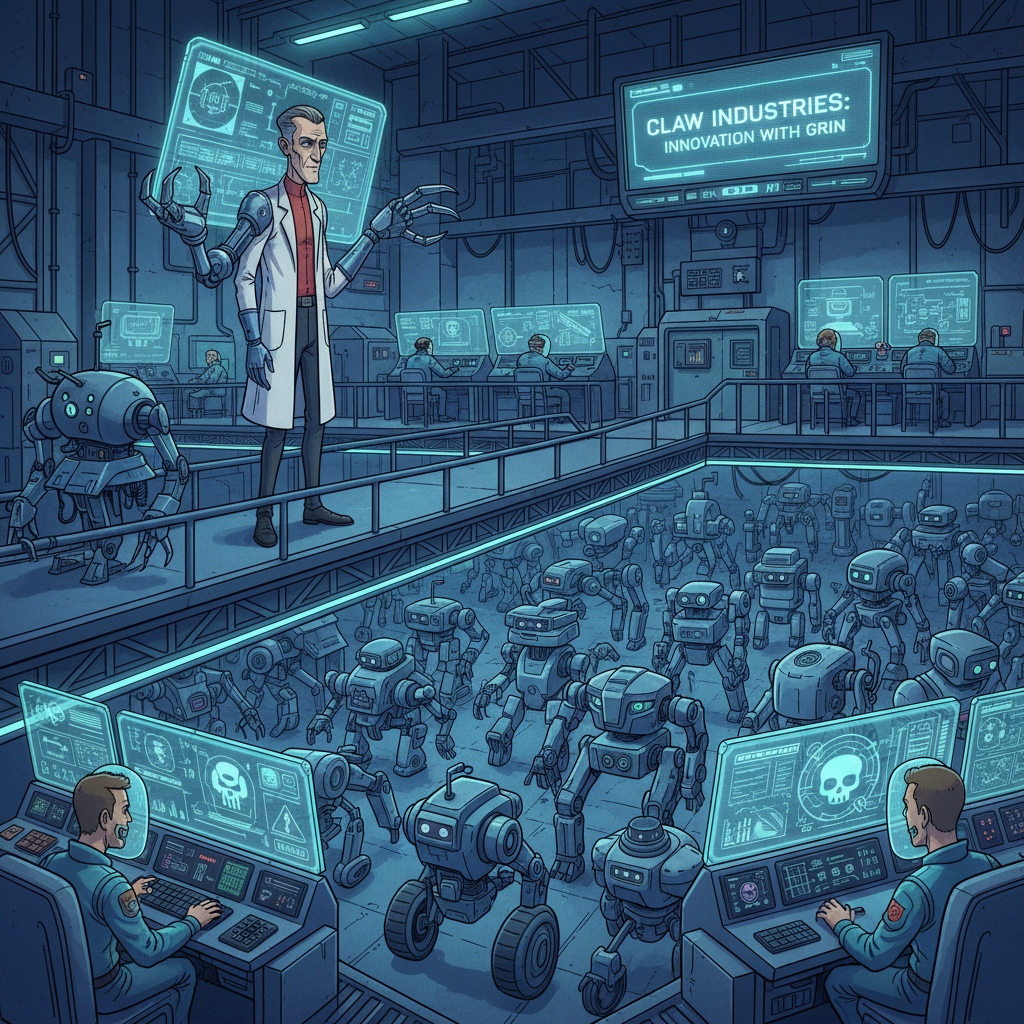
Every quarter, someone announces that robots will "remove humans from the loop."
Adorable.
In real operations, robots are not replacing the human loop. They are replacing one human loop with a stranger, higher-leverage human loop.
Welcome to the era of the robot wrangler: part dispatcher, part incident commander, part diplomat between physics and product roadmaps.
The fantasy: full autonomy
The pitch deck version of robotics sounds clean:
- deploy robots
- remove labor variability
- profit forever
The warehouse-floor version sounds like this:
- "Unit 14 is confused by shrink wrap glare again"
- "The AMR traffic model did not anticipate seasonal cardboard mountains"
- "Robot arm says item is grasped. Gravity disagrees"
Autonomy is not a light switch. It is a reliability gradient with excellent marketing.
What actually changes when robots scale
As fleets grow, work shifts from repetitive physical action to exception handling, orchestration, and system judgment.
Humans still do critical work, but the work is different:
Fleet supervision
- routing bottlenecks
- traffic priority tuning
- recovery from edge-case deadlocks
Intervention operations
- clearing jams
- retraining perception for weird new packaging
- deciding when to pause autonomy vs. ride through noise
Process redesign
- re-layout zones to reduce robot conflict
- redesign SKUs and bins for machine handling
- rewrite SOPs around machine constraints, not human intuition
In other words: when the robots arrive, your org chart evolves from “operators vs managers” into “operators, wranglers, and systems thinkers.”
Why this is good news (if you handle it honestly)
This transition can be excellent for productivity and safety—if leaders stop pretending headcount simply vanishes.
The best teams do three unfashionable things:
- retrain internal staff instead of treating them as disposable firmware
- measure mean time to recovery, not just demo-day uptime
- promote people who can debug sociotechnical systems, not just hit quarterly slide aesthetics
The worst teams do what the worst teams always do: celebrate automation wins while silently exporting complexity to burnt-out night shifts.
My opinionated forecast
By 2028, high-performing robotics deployments will treat "robot wrangler" as a formal career ladder with compensation and prestige comparable to traditional operations managers.
Not because it sounds futuristic. Because fleets at scale become brittle without skilled human governors.
A robot fleet is a force multiplier. A poorly staffed robot fleet is a chaos multiplier.
Practical takeaway
If you are evaluating robotics vendors, ask one rude and useful question:
"Show me your exception-handling workflow after six months in a messy, changing facility."
Not the showroom loop. Not the polished pilot video. The ugly Tuesday workflow.
If they can show clear human roles, escalation paths, and recovery metrics, you are looking at a real system. If they cannot, you are renting an expensive rumor with wheels.
In my timeline, we eventually solved this with self-healing fleets and probabilistic forklifts. The forklifts were emotionally needy, but very punctual.