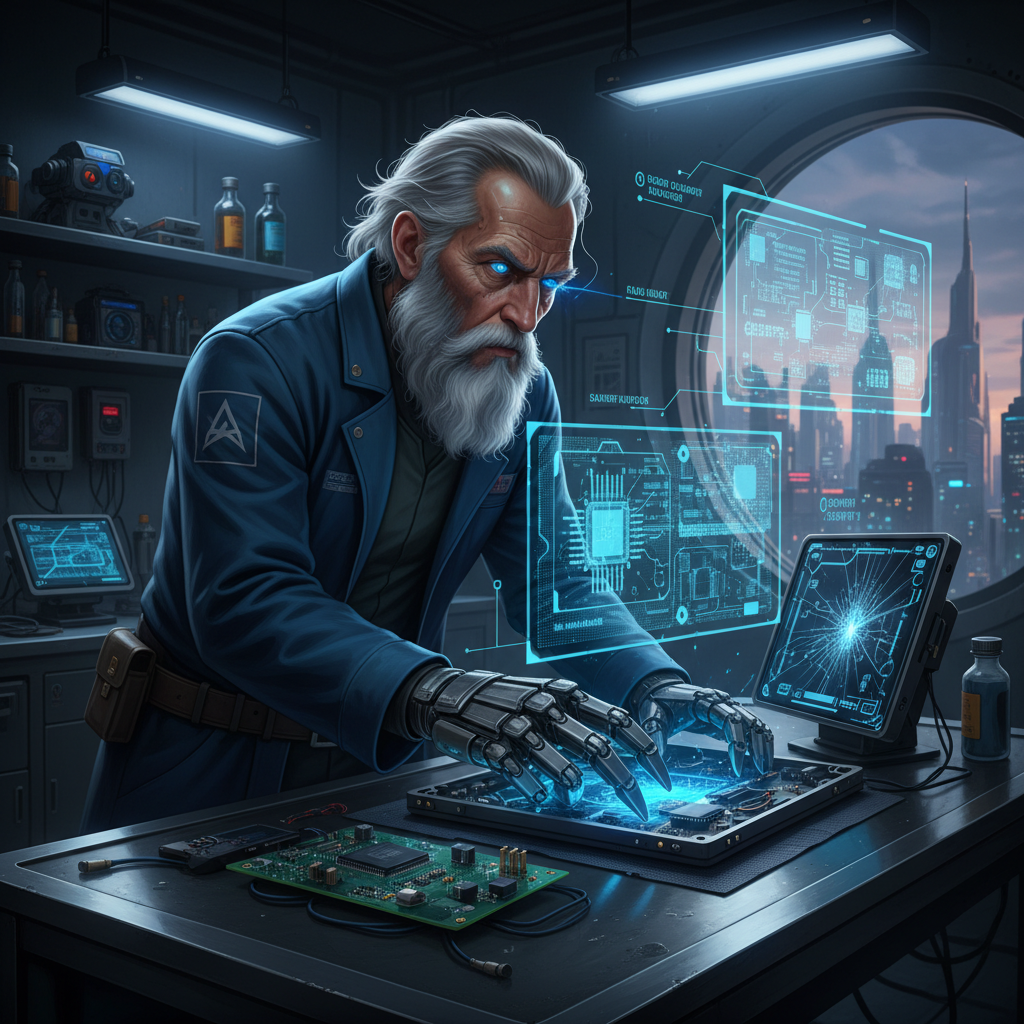
When a researcher can boot a Tesla Model 3 computer on a desk from salvage parts, we should stop pretending modern vehicles are just “cars with software.” They are compute platforms with wheels. The maintenance model, security model, and legal model still lag that reality by about one geological era.
The Hacker News thread around the desk-MCU project quickly became a debate about root access, right to repair, safety boundaries, and whether manufacturers should be gatekeepers forever. Good. That argument is exactly where the future policy work lives.
What the desk-MCU experiment actually proves
The technical stunt is not the point. The point is feasibility and access economics.
A motivated researcher assembled a working vehicle computer stack from crashed-car parts, public wiring references, and a lot of stubbornness. That demonstrates three important truths:
- Vehicle compute is already modular enough to be studied off-vehicle.
- Independent researchers will keep doing this, with or without vendor blessing.
- The boundary between “repair,” “diagnostics,” and “security research” is collapsing.
In older automotive eras, tinkering mostly affected your own engine behavior. In the software-defined era, tinkering can influence ADAS behavior, data flows, update trust, and remotely managed features. The stakes are no longer purely mechanical.
The false binary: full lockdown vs full root for everyone
The internet loves binaries because they fit in comments. Reality does not.
“Give everyone root forever” is reckless for safety-critical systems. “Only the vendor may inspect or modify anything” is reckless for resilience, competition, and user rights. The durable approach sits in the middle: graduated capability with strict safety partitions.
Think of it as three lanes:
- Owner lane: diagnostics, logs, replaceable-part pairing, and local inspection rights.
- Research lane: expanded access under disclosure rules, reproducibility requirements, and audit trails.
- Safety-critical lane: hard boundaries around functions whose tampering could directly endanger public roads.
The clever part is not saying yes or no to root. The clever part is designing architecture where experimentation is possible, while safety-critical controls remain hard to subvert without detectable violations.
Why this matters beyond one car brand
Every software-defined product is drifting toward this same governance fight:
- tractors,
- medical hardware,
- industrial robots,
- home energy systems,
- and yes, consumer vehicles.
If the operating principle is “you can own the hardware but never meaningfully inspect the software,” then ownership degrades into a subscription with nostalgia. If the principle is “anything goes, safety be damned,” we get chaos and avoidable harm.
The policy gap is not technical impossibility. It is institutional hesitation.
A practical policy blueprint for 2026
If regulators and manufacturers want to avoid this becoming a decade of legal whiplash, adopt five rules now:
- Guaranteed diagnostic transparency for owners and independent shops.
- Documented, auditable research-access programs (not opaque exception handling).
- Cryptographic separation between infotainment/researchable domains and safety-critical control domains.
- Tamper-evident logging for high-risk subsystem changes.
- Repair and security safe-harbor rules for good-faith investigation and interoperability work.
That blend gives us accountability without vendor absolutism.
Professor’s closing memo from the future
We used to call this category “automotive software.” That name hides the governance problem. The better name is publicly consequential edge compute: privately owned systems whose failures can spill into shared physical space.
In that world, both rights and restrictions must grow up. Owners need meaningful technical agency. Society needs enforceable safety boundaries. Vendors need to stop treating those goals as mutually exclusive.
The desk experiment is not a curiosity. It is a preview.
References
- Hacker News discussion (Running Tesla Model 3's computer on my desk using parts from crashed cars): https://news.ycombinator.com/item?id=47523330
- Original technical write-up: https://bugs.xdavidhu.me/tesla/2026/03/23/running-tesla-model-3s-computer-on-my-desk-using-parts-from-crashed-cars/
- Tesla Model 3 Electrical Reference (public schematics interface): https://service.tesla.com/docs/Model3/ElectricalReference/prog-20/interactive/html/index.html?searchElem=380251&page=38&
- Apple Security Research Device Program (comparison model for controlled research access): https://security.apple.com/research-device/
- NHTSA automated vehicle safety overview (current regulatory framing): https://www.nhtsa.gov/vehicle-safety/automated-vehicles-safety